How to Clean a Messy House When You’re Completely Overwhelmed
When the whole house feels like one enormous job, forget deep cleaning and start with triage. This simple order gets the chaos under control first, so the actual cleaning feels much more manageable.
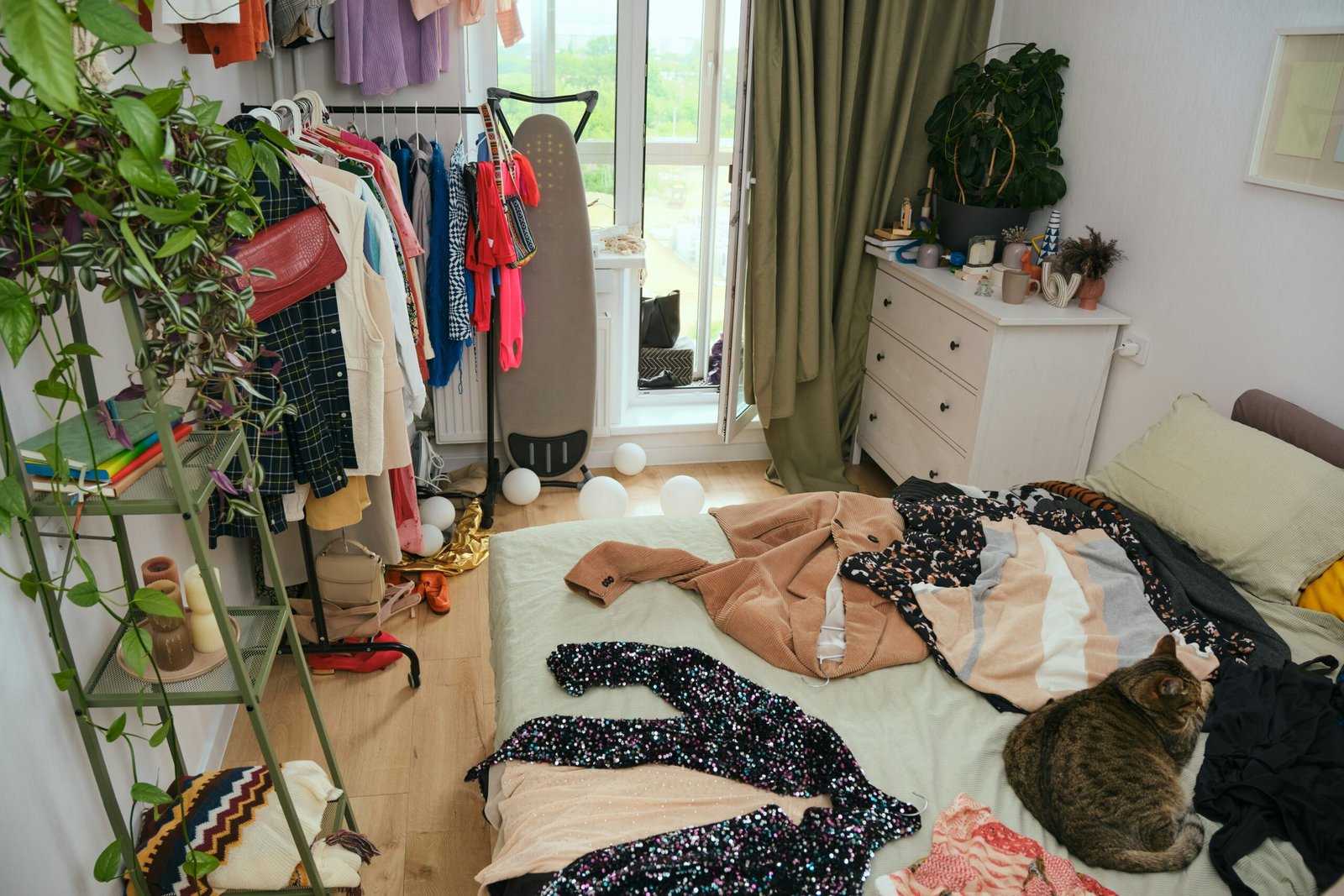
There is a point where normal cleaning advice becomes completely useless. Someone telling you to ‘start by dusting’ is not particularly helpful when there are mugs in three different rooms, half the washing is on the floor and you’re fairly sure the kitchen counter technically still exists underneath everything somewhere.
When you’re trying to clean a messy house, I find the hardest part isn’t actually the cleaning itself. It’s working out where to start. Everything you look at seems to be a job, every job contains another three jobs, and it is incredibly easy to pick up one random object, walk into another room to put it away and somehow end up reorganising a drawer you did not care about twenty minutes ago.
At that point, I don’t think you need a cleaning routine. You need triage. The first goal is not to make the house spotless. It is to get it from overwhelming to manageable.
Start With the Things That Require Almost No Decisions
When you’re already overwhelmed, starting with anything that requires lots of thinking is a terrible idea. Sorting paperwork, deciding where random objects belong or finally tackling the cupboard you have been avoiding for six months can wait. Start with the things that are obvious.
For me, that means rubbish first. Take a bin bag and walk around collecting anything that is unquestionably destined for the bin: empty packets, bottles, tissues, food packaging, receipts you don’t need and anything else you can throw away without having an internal debate about it.
The important part is not getting distracted by everything else you find. Don’t start organising the things underneath the rubbish, don’t decide to wipe down every surface as you pass it and definitely don’t turn this into an opportunity to sort the junk drawer. For now, you are collecting rubbish. That is the whole job.
It sounds almost too simple, but removing an entire category of clutter can make a room look noticeably calmer without requiring much decision-making at all.
Next, Collect the Dishes
Once the obvious rubbish is gone, collect anything that belongs in the kitchen. Mugs, glasses, plates, cutlery and abandoned food containers can all go back there.
You do not necessarily need to wash everything straight away. This is where I find it helpful to separate tidying from cleaning. Getting every mug back into the kitchen is one job. Washing every mug is another job. You are allowed to finish the first without immediately committing yourself to the second.
This applies to the rest of the house too. Sometimes the quickest way to reduce the feeling of chaos is simply to get things back into the right general area before worrying about what happens to them next.
Get the Laundry Into One Place
Clothes are usually the next big source of visual clutter, but this does not mean you now need to start folding everything and putting it neatly into drawers. The immediate goal is much simpler: stop having clothes spread across the room.
Dirty clothes can go into the laundry basket and clean clothes can go somewhere separate. Then there is the third category that a surprising amount of organisation advice seems determined to pretend does not exist: clothes that have been worn but are not dirty enough to wash yet.
If those normally end up on a chair, the end of the bed or the floor, give them somewhere intentional to go. Maybe that is a basket. Maybe it is a hook. Maybe you genuinely decide that one particular chair is the wear-again chair and stop pretending you’re ever going to eliminate it.
That idea fits with something I’ve been trying to do more generally: organise for the way you actually behave, rather than for the imaginary version of yourself who puts everything away perfectly every time.
Clear One Surface, Not Every Surface
Once the obvious rubbish, dishes and clothes have been contained, pick one surface and clear it completely. It could be your coffee table, bedside table, desk or one section of the kitchen counter. The important word there is one.
A messy room where every single surface is covered can feel impossible because there is nowhere for your eyes to rest and nowhere obvious to begin. Clearing one visible area gives you an immediate sign that something has changed, and it also gives you somewhere to work from if you decide to carry on.
This is one of those occasions where I think visible progress matters more than technically doing the most efficient cleaning job. Spending twenty minutes deep-cleaning something hidden away might be useful, but clearing the surface you have been staring at for three days is probably going to make the room feel better much faster.
Put Away the Things With an Obvious Home
Now you can start dealing with some of the remaining clutter, but I would still keep the decision-making low. If you pick something up and immediately know where it lives, put it there. Shoes can go with the shoes, books can go on the shelf, makeup can go where you keep makeup and the remote can go back to whichever mysterious place apparently qualifies as the remote’s home.
The awkward stuff can wait. If you pick something up and immediately think, ‘Where on earth am I supposed to put this?’, that is not an invitation to redesign your entire storage system in the middle of cleaning the living room.
I have lost far too much time this way. You find three batteries, a cable you cannot identify and some paperwork, and suddenly the clean has stopped because you are researching storage solutions for electronics. That can be another job for another day.
Give the Random Stuff a Doom Basket
Everything without an obvious home can go into a basket, box or bag for now. Yes, this is technically creating a container full of miscellaneous nonsense. No, it is not supposed to be the final solution.
It is containment.
Twenty random objects spread around a room feel like twenty separate jobs. Twenty random objects sitting in one basket feel like one future job. That is a significant improvement when your main problem is that everything currently feels like too much.
You can go through the basket when the room is calmer and you have enough brainpower to make decisions about cables, paperwork and all the other objects that seem to exist purely to derail cleaning attempts.
Now You Can Actually Clean
Once the clutter is mostly under control, actual cleaning becomes considerably easier. You can wipe surfaces because you can reach them. You can hoover because you can see the floor. You can clean the sink because every mug you own is no longer scattered around the house.
This is when I would choose the cleaning jobs that make the biggest difference to how the space feels. For me, that is usually having a clear kitchen sink, clean bedding and floors that are reasonably clear. For you it might be the bathroom, kitchen counters or getting the sofa cleared.
You still do not have to clean everything. This is where the Good Day, Meh Day, Survival Day idea becomes useful too. On a Good Day you might carry on and properly clean the room. On a Meh Day you might wipe the important surfaces and hoover. On a Survival Day, getting the rubbish and dishes under control might already have been enough.
Stop Before Cleaning Becomes a Punishment
One of the reasons I think cleaning can become overwhelming is that once you finally manage to start, there is a temptation to decide you now have to finish the entire house. That turns a useful burst of energy into an enormous job that apparently has no finishing point.
You are allowed to stop when the house is better.
If you collected the rubbish and dishes, it is better. If you got the laundry into one place and cleared the kitchen counter, it is better. If you managed to make one room comfortable enough to sit in again, that is still a useful result.
Sometimes carrying on until you have absolutely exhausted yourself just means you have less energy for dinner, showering, getting ready for tomorrow or anything else that still needs to happen. The point of getting the house under control is supposed to be making life easier, not sacrificing the rest of the day to it.
Use the Same Order Next Time
The bit I find most helpful is having an order that I don’t need to reinvent every time the house gets away from me: rubbish, dishes, laundry, one clear surface, obvious things back home, random things contained, then actual cleaning.
It is not some scientifically perfect cleaning method, and it does not need to be. It just removes the easiest categories first and leaves the more complicated decisions until the room already feels calmer.
When everything feels overwhelming, that is enough. You don’t need to start with the perfect cleaning routine, and you certainly don’t need to finish everything in one go.
You just need the house to be a little less chaotic than it was when you started.