Cook Once, Eat Twice: The Lazy Girl Rule That Makes Feeding Yourself Easier
Traditional meal prep is far too much commitment. Cook once, eat twice is the lazier alternative: make a little extra while you’re already cooking and give Future You a head start.
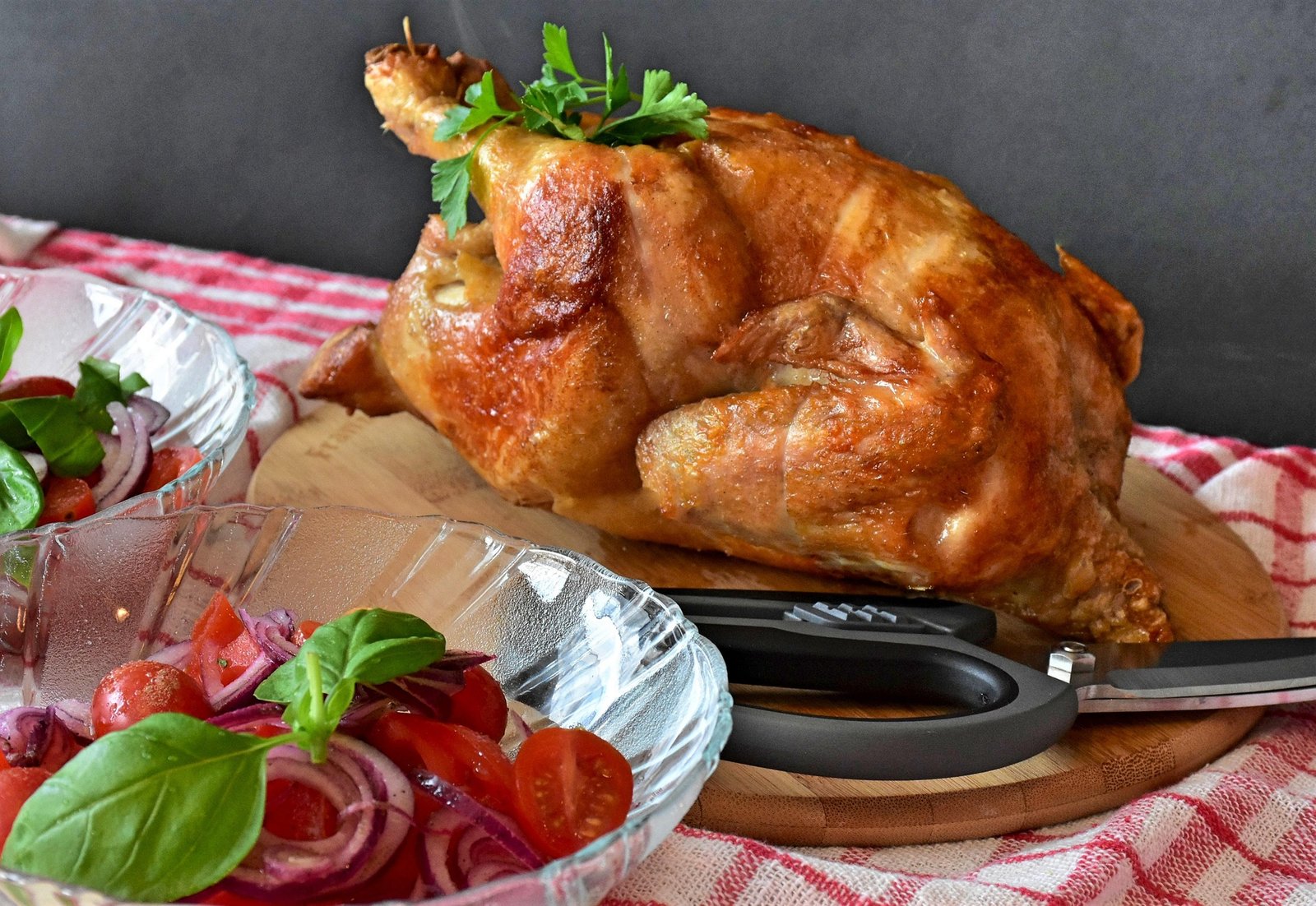
If I’m already cooking, I may as well make Future Me’s life easier while I’m here.
I have absolutely no interest in spending Sunday afternoon lovingly portioning fourteen identical meals into matching glass containers.
Meal prep, in the traditional sense, has never particularly appealed to me. It requires deciding what I’m going to want to eat several days from now, cooking a ridiculous amount of it in one go, finding enough containers to store it all, and then apparently remaining enthusiastic about eating the exact same thing until Thursday.
My brain simply does not operate with that level of cooperation.
What does work for me is much less organised.
If I’m cooking something anyway, I make more than I need.
Not necessarily enough for the entire week. Not even always enough for a full second meal. Just enough that tomorrow’s lunch, dinner, sandwich filling or emergency “I cannot be bothered” food is already halfway sorted.
I call it cook once, eat twice.
And it has made feeding myself considerably less annoying.
This Is Not Meal Prep
There is an important distinction here because the phrase “meal prep” immediately makes me picture somebody spending three hours weighing chicken and broccoli into six containers.
Cook once, eat twice is much lazier than that.
You are already roasting a chicken, so you roast two. One becomes tonight’s dinner and the other becomes sandwich meat, salad topping, wraps or something to throw into pasta tomorrow.
You are already making chilli, so you make a bigger pan. Tonight it goes over rice; tomorrow it gets shoved into a jacket potato with cheese.
You are already boiling potatoes, so you boil extra. Some get eaten with dinner and the rest go into the fridge ready to become crispy air-fryer potatoes, potato salad or breakfast hash.
There is no colour-coded plan. There doesn’t need to be a spreadsheet. You don’t even necessarily need to know exactly what meal number two is going to be yet.
The entire point is simply that you’ve done some of the work while you already had enough energy to do the work.
Two Roast Chickens Is Basically the Same Amount of Effort as One
This is probably my favourite example because it demonstrates the whole idea perfectly.
If I’m roasting a chicken, the irritating parts are already happening. I’ve turned the oven on. I’ve got a roasting tray out. I’m handling raw chicken. I’m seasoning things. I’m waiting for it to cook. I’m eventually cleaning the tray.
Putting a second chicken in beside it barely changes the amount of effort involved.
So one chicken becomes dinner. The second gets cooled, stripped and put into the fridge. Suddenly I have cooked chicken available for sandwiches, wraps, salads, pasta, rice bowls or whatever else I can assemble without having to start cooking meat from scratch again.
That second chicken is not really “meal prep”. It is just exploiting the fact that I was already doing the difficult bit.
And that is a theme you are going to see repeatedly around here.
If I already have momentum, I’m going to squeeze as much usefulness out of it as I reasonably can.
Stop Making Tomorrow Start From Zero
I think this is the actual reason this works so well for me.
A completely uncooked meal has a surprisingly high number of steps when you’re tired. You have to decide what to eat, check what you have, prepare ingredients, cook everything, wait for it, clean up afterwards and ideally remember that vegetables exist somewhere in the middle of all that.
If half the meal already exists, the whole thing feels different.
Cooked chicken in the fridge means dinner can become chicken wraps in five minutes. Leftover mince means I only need to sort pasta. Already-cooked potatoes mean I can chuck them in the air fryer while I make something else. A container of roasted vegetables can be thrown into rice, couscous, pasta or an omelette without much thought.
You haven’t necessarily prepared an entire meal.
You’ve just made sure tomorrow does not have to start from zero.
That reduction in friction is often enough to stop me giving up and ordering something instead.
Cook Components, Not Just Meals
This is where the idea becomes much more useful than simply eating leftovers.
Sometimes I absolutely do want the same dinner again tomorrow. If I’ve made lasagne, chilli, curry or cottage pie, brilliant. Future Me can have exactly the same thing and be grateful that Present Me bothered.
But other foods are more useful as components.
Cooked chicken is a component. Rice is a component. Roasted vegetables are components. Boiled potatoes are components. Taco mince is a component.
That means you can reuse them without feeling like you’re eating yesterday’s dinner again.
For example, a tray of roasted chicken and vegetables could be:
- dinner with potatoes tonight
- stuffed into wraps tomorrow
- thrown over rice with sauce the next evening
One cooking session has quietly contributed to three different meals, but none of them feel particularly meal-preppy.
That flexibility matters to me because I am very capable of preparing five portions of something on Sunday and deciding by Tuesday that I never want to look at it again.
The Second Meal Does Not Have to Be Impressive
There is another trap here, which is taking a genuinely useful lazy system and immediately making it more complicated.
If tonight’s roast chicken becomes tomorrow’s chicken-and-cheese sandwich, that counts.
You do not need to transform the leftovers into some elaborate second recipe involving twelve ingredients and a sauce you’ve never heard of. In fact, if using the leftovers requires almost as much effort as cooking the original meal, we have rather missed the point.
A perfectly respectable second meal might be:
Leftover chilli + microwave rice.
Cooked chicken + bagged salad + dressing.
Roasted vegetables + couscous.
Cooked sausages + bread roll + mustard.
Leftover potatoes + fried eggs.
There is no award for creativity here. The goal is to feed yourself again with less effort than it took the first time.
The Freezer Is Basically a Pause Button
Cook once, eat twice also doesn’t mean you have to eat the second portion tomorrow.
If I make something that freezes well, sometimes the second meal gets frozen immediately. That way I’m not committing myself to eating chilli twice in two days, but I’ve still created a future meal that requires almost no work.
This is especially useful with things like chilli, curry, bolognese, soups, stews and cooked mince-based sauces. Even individual portions of cooked meat can be useful if they’re frozen and labelled sensibly.
The important word there is sensibly.
Because putting an unidentified brown substance into the freezer and expecting myself to remember what it is three months later is not a system. That is archaeology.
A bit of masking tape and “CHILLI – SEPT” will save you from eventually holding a frozen container up to the light and trying to determine whether it contains dinner or gravy.
You Can Do This With Breakfast and Lunch Too
This doesn’t have to be a dinner-only system.
If I’m making boiled eggs, making a couple of extras means breakfast or lunch tomorrow has already gained a protein source. If I’m chopping tomatoes or cucumber, chopping more than I immediately need means another meal has vegetables ready to go.
Even making two sandwiches while everything is already out can qualify.
The first sandwich is lunch today. The second goes in the fridge for tomorrow.
Again, we’re not changing our lives here. We are just noticing that doing something twice while everything is already in front of you is often easier than doing the entire process again tomorrow.
Make Storage Part of the System
There is one extremely boring part of this that actually matters: if your extra food disappears into the back of the fridge and evolves into a new life form, we have not saved ourselves any money or effort.
The easier the leftovers are to see and use, the more likely I am to actually use them.
Clear containers help. Putting ready-to-eat food somewhere obvious helps. Even having one designated “eat this first” shelf or section can stop perfectly good food becoming invisible.
I also like storing things in useful amounts. A massive container containing four meals’ worth of chicken is less convenient than splitting it into a couple of portions I can just grab.
You don’t need an Instagram-worthy fridge organisation system. You just need Future You to be able to open the door and immediately understand what food is available.
This Works Because It Doesn’t Require a Better Version of You
That is probably why I like this rule so much.
It doesn’t depend on me suddenly becoming somebody who enjoys elaborate weekly meal planning. It doesn’t require me to develop more willpower or spend every Sunday preparing food. It doesn’t even require me to eat particularly differently.
It just asks one question:
If you are already doing the work, can you make a little extra?
Sometimes the answer will be no. Maybe money is tight, there isn’t enough food, freezer space is limited or you simply cannot be bothered.
Fine.
But when the answer is yes, that extra portion can remove an entire decision from tomorrow.
And there are days when removing one decision is disproportionately helpful.
The Routine-ish Version of Meal Prep
So no, I probably will not be spending Sunday afternoon portioning seven identical lunches into aesthetically pleasing containers.
I will, however, cook two chickens.
I’ll make too much chilli.
I’ll boil six potatoes when I only need three.
I’ll cook the whole packet of mince instead of half of it.
I’ll make tomorrow’s sandwich while today’s sandwich ingredients are still sitting on the counter.
It is not particularly glamorous, and nobody is going to make a motivational TikTok about it.
But it means that every now and then I open the fridge on a day when cooking feels completely beyond me and discover that somebody has already done half the job.
Unfortunately, that somebody was me.
Cook once. Eat twice. Make Future You slightly less annoyed.